
Wood and vinyl are the two most popular fence materials for Massachusetts backyards, and both are good choices — the right one depends on your budget, how much upkeep you want to do, and how long you plan to stay in the house. Here's a straight comparison to help you decide.
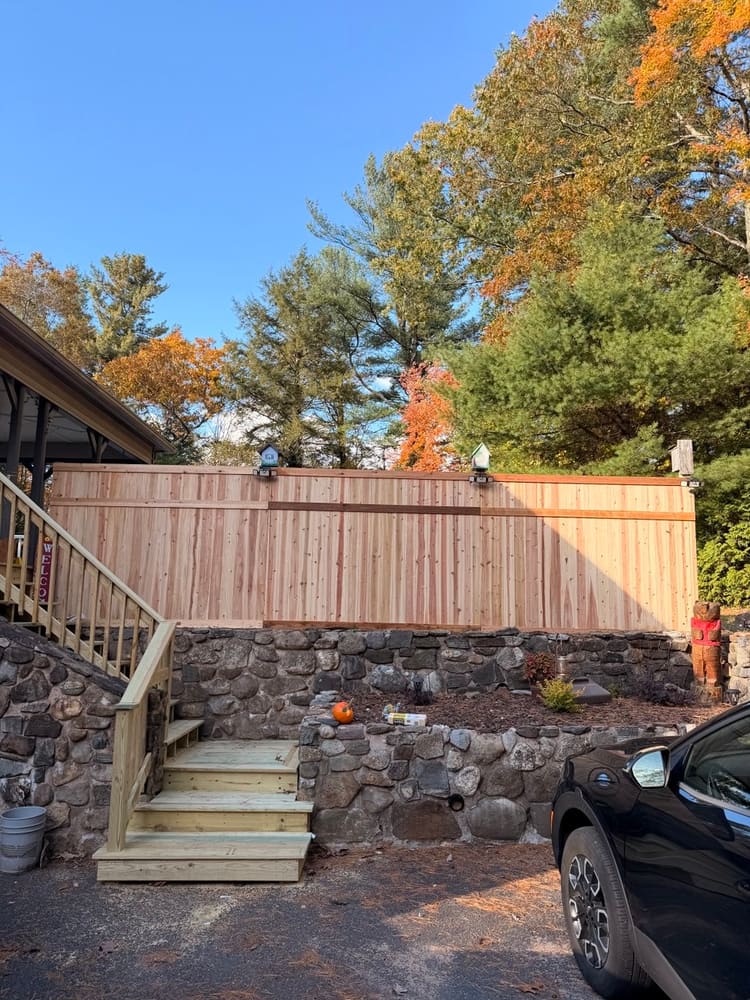
The Short Answer
- Choose wood if upfront cost matters most and you like a classic New England look.
- Choose vinyl if you want the lowest long-term maintenance and don't mind paying more up front.
- Wood: $25 – $45/ft installed · Vinyl: $30 – $55/ft installed
Wood vs. Vinyl Fence: Side-by-Side Comparison
| Factor | Wood | Vinyl |
|---|---|---|
| Upfront cost (installed) | $25 – $45/ft | $30 – $55/ft |
| Typical lifespan | 15 – 20 years | 25 – 30+ years |
| Maintenance | Stain or seal every 2–3 years | Occasional hose-down — no staining or painting |
| Winter performance | Can warp or rot if not sealed; needs solid footings below frost line | Won't rot or warp; rated panels handle cold well |
| Repairs | Easy to patch or replace a single board | Panel replacement if a section cracks |
| Look | Natural, classic, can be stained any color | Clean, uniform, limited color options (usually white or tan) |
How Each Material Handles New England Winters
This is where Massachusetts homeowners have real, climate-specific concerns. Wood fences hold up well as long as posts are set below the frost line and the wood is sealed or stained regularly — skip the maintenance and you'll see warping, splitting or rot within a few years, especially at the base where snow piles up. Vinyl doesn't rot or need sealing, and quality panels are rated for cold-weather flexibility, but a hard impact in sub-freezing temperatures (a falling branch, a snowblower) can crack a panel more easily than it would in summer.
Not sure which is right for your yard?
We'll walk your property, talk through both options honestly, and give you a clear, no-pressure estimate for each — for free.
Request Your Free On-Site EstimateCost Over Time: Wood vs. Vinyl
Wood costs less to install but adds up over the years — staining a 150-ft fence every 2–3 years typically runs $400–$800 per application. Over 20 years, that maintenance cost can close much of the gap with vinyl's higher upfront price. If you plan to stay in your home long-term, vinyl often works out close to a wash on total cost while saving you the recurring weekend project. If you're doing a shorter-term hold or want the lowest possible cost today, wood wins.
Which Should You Choose?
- Go with wood if: you want the lowest upfront cost, prefer a natural look you can stain to match your home, or plan to sell within the next several years.
- Go with vinyl if: you want to install it once and not think about maintenance again, or you're planning to stay long-term and want the lifespan advantage.
- Consider a hybrid approach: some homeowners use vinyl for the highly visible front section and wood for less-visible side or rear runs to balance cost and looks.
Neither material is the "wrong" choice — it comes down to whether you'd rather pay less now or maintain less later.
Frequently Asked Questions
Which fence material lasts longer, wood or vinyl?
Vinyl typically lasts 25 to 30+ years compared to 15 to 20 years for a well-maintained wood fence.
Does vinyl fencing crack in cold weather?
Quality vinyl is rated for cold climates and holds up well, but like any rigid material it can be more prone to cracking from a hard impact in sub-freezing temperatures than in warm weather.
How often does a wood fence need to be stained?
Most wood fences should be stained or sealed every 2 to 3 years to prevent warping, splitting and rot, especially in Massachusetts' wet winters.
Is vinyl fencing more expensive than wood?
Yes, vinyl typically costs more upfront — usually $5 to $10 more per linear foot — but requires far less maintenance over its lifespan.