
Fence pricing is usually quoted by the linear foot, which makes it easy to compare materials once you know the ranges. Here's an honest, real-world breakdown of 2026 fence installation costs in Massachusetts — by material, what drives the price up or down, and how to get the most fence for your budget.
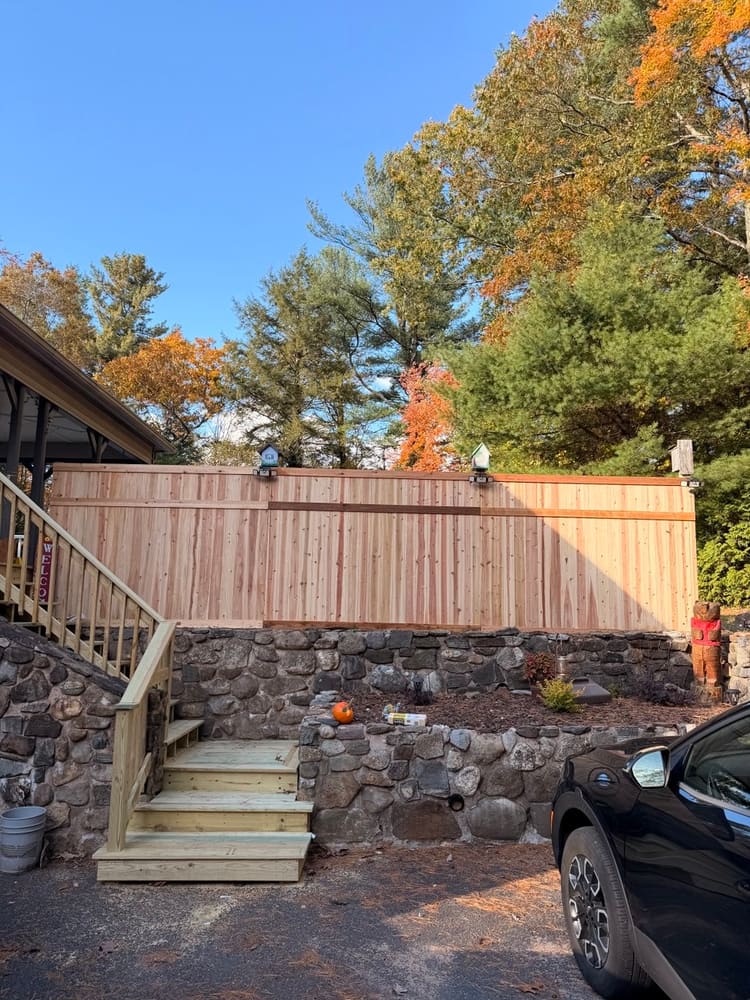
The Short Answer (per linear foot, installed)
- Chain-link: $12 – $25/ft
- Wood (privacy or picket): $25 – $45/ft
- Vinyl: $30 – $55/ft
- Ornamental aluminum / steel: $35 – $65/ft
Fence Costs in Massachusetts by Material
For a typical backyard fence — roughly 150–200 linear feet — here's what each material tends to run in total, installed:
| Material | Best for | Typical total cost |
|---|---|---|
| Chain-link | Utility, dogs, budget projects, backyards where looks matter less | $1,800 – $3,800 |
| Wood privacy / picket | Backyard privacy, classic New England look, resale appeal | $3,800 – $6,800 |
| Vinyl | Low maintenance, won't rot or need painting, clean modern look | $4,500 – $8,300 |
| Ornamental aluminum / steel | Front yards, pool code compliance, upscale curb appeal | $5,300 – $9,800 |
5 Things That Drive Your Fence Cost Up or Down
- Material. Chain-link is the budget option; wood is the classic mid-range choice; vinyl and ornamental metal sit at the top for looks and low maintenance.
- Height. A 6-ft privacy fence costs meaningfully more per foot than a 4-ft picket fence — more material, more labor, sturdier posts.
- Gates. Each gate adds hardware, framing and labor. A single walk gate is minor; a wide double drive gate adds real cost.
- Terrain & access. Sloped yards, tree roots, ledge, or tight access for equipment all add labor time. Flat, clear yards install fastest and cheapest.
- Permits & property lines. Many MA towns require a permit for fences over a certain height, and knowing your exact property line avoids costly disputes or having to move the fence later.
Want a real number for your yard?
We'll walk your property, measure the actual run, flag any access or line issues, and give you a clear, honest estimate — for free.
Request Your Free On-Site EstimateHow to Save Money Without Cutting Corners
- Mix materials strategically. Use privacy fencing where you actually need it (backyard) and a cheaper style elsewhere.
- Keep gates to a minimum — one well-placed gate is usually enough for most yards.
- Confirm your property lines up front — a quick check now is far cheaper than moving a fence later.
- Choose pressure-treated wood over cedar if budget matters more than the natural look — it holds up well with a stain.
- Get a written quote by the linear foot so you can compare apples to apples between materials and contractors.
The cheapest fence isn't always the best value — factor in maintenance. Wood needs staining every few years; vinyl and aluminum don't, which can close the gap over time.
Is a New Fence Worth It in Massachusetts?
A fence adds privacy, keeps pets and kids contained, and is one of the more noticeable curb-appeal upgrades a home can get. For homes with pools, many MA towns require code-compliant fencing anyway, which makes the decision easy. It's also one of the faster projects to complete, so you see the return quickly.
Frequently Asked Questions
How long does fence installation take?
Most residential fence installations take 1–3 days once materials are on site, depending on length, terrain and gate count.
Do I need a permit for a fence in Massachusetts?
It depends on the town and the fence height — many Massachusetts towns require a permit for fences above a certain height (often 6–7 ft) or in certain zones. Your contractor can confirm what your specific town requires.
Do I need a survey before installing a fence?
It's strongly recommended, especially if your property lines aren't clearly marked. Installing on or near a boundary without confirming it can lead to disputes with neighbors or having to move the fence.
What's the cheapest fence option?
Chain-link is typically the most affordable option per linear foot, followed by basic pressure-treated wood picket fencing.
Trying to pick between vinyl and wood? See our full comparison →