
This is one of the first questions almost every homeowner asks before starting a deck or fence project — and the honest answer is "it depends." Here's a clear breakdown of when Massachusetts homeowners need a permit, what the process looks like, and what actually happens if you skip it.
The Short Answer
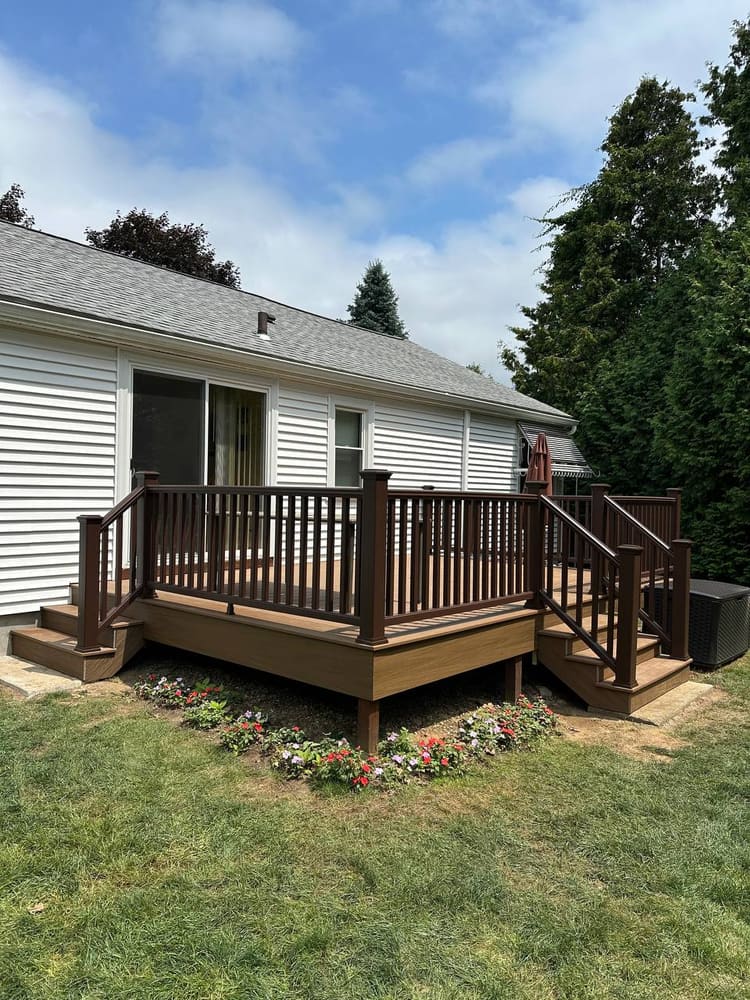
- Deck: Yes, in nearly every Massachusetts town — if it's attached to the house, more than about 30 inches above grade, or requires new footings.
- Fence: Usually no building permit required for a standard residential fence, but height limits, setbacks and HOA rules still apply.
When You Need a Permit for a Deck
Massachusetts follows the state building code, and most local building departments require a permit for deck construction because a deck is a structural addition to your home. In practice, that means a permit is almost always required when:
- The deck attaches to the house (ledger board bolted to the structure)
- The walking surface is more than roughly 30 inches above grade
- New footings, posts, or structural framing are involved
- You're replacing an existing deck rather than doing minor repairs (like swapping a few boards)
A permit triggers an inspection process — typically a footing inspection before you pour concrete, a framing inspection before decking goes down, and a final inspection when it's complete. This isn't red tape for its own sake: it confirms the footings are deep enough for New England frost, the ledger is properly flashed and bolted, and the structure can safely support the load.
When You Need a Permit for a Fence
Fences are treated differently from decks in most Massachusetts towns because they're not considered structural. That said, "no building permit" doesn't mean "no rules." Before you install a fence, check:
- Height limits. Many towns cap fence height at 6–7 feet in side/rear yards and lower (often 4 ft) in front yards, and some require a permit specifically once you exceed a certain height.
- Setback requirements. Some towns require fences to sit a certain distance from the property line or street.
- Pool code. If the fence is enclosing a swimming pool, Massachusetts building code has specific height and gate-latch requirements that are strictly enforced.
- HOA or deed restrictions. These are separate from town permitting but can be just as binding — always check before you build.
Not sure what your project needs?
We handle the permit process on every job that requires one — from application to final inspection — so you don't have to navigate your town's building department alone.
Request Your Free On-Site EstimateWhat Happens If You Skip the Permit?
It's tempting to skip the process, especially for a smaller project, but it can cost you more later:
- Stop-work orders and fines. If the town discovers unpermitted structural work, they can require you to stop, apply retroactively, and sometimes tear open finished work for inspection.
- Home sale problems. Unpermitted decks are one of the most common issues flagged during a home inspection or title search, which can delay or derail a sale.
- Insurance gaps. If an unpermitted deck fails and someone is injured, your homeowner's insurance may deny the claim.
- Safety risk. Permits exist because deck collapses are a real and preventable failure mode — proper footings and ledger attachment are not optional in New England's freeze-thaw climate.
A permit isn't a formality that slows your project down — it's the process that confirms your deck won't collapse under a full deck party or a heavy snow load.
How the Process Works
When we build a deck that needs a permit, the process generally looks like this: we submit plans to your local building department, pay the permit fee, schedule a footing inspection once posts are set, a framing inspection before decking, and a final inspection at completion. Timelines vary by town, but plan for the permit itself to add roughly 1–3 weeks before work can start, and inspections are scheduled around the build — they rarely slow the project down significantly when a licensed contractor manages the paperwork.
Frequently Asked Questions
Do I need a permit for a small, low deck?
Often not, if it's freestanding (not attached to the house) and low to the ground — but the exact threshold varies by town, so it's worth confirming before you build.
What happens if I build a deck without a permit?
You risk a stop-work order, fines, having to open up finished work for inspection, complications when selling your home, and potential insurance issues if something goes wrong.
How long does it take to get a deck permit in Massachusetts?
It varies by town, but most permits are issued within 1 to 3 weeks of a complete application. Busier building departments in peak building season can take longer.
Does BDaniel General Construction handle permits for me?
Yes. On any project that requires a permit, we handle the application, coordinate inspections with your local building department, and make sure the work passes at each stage.